



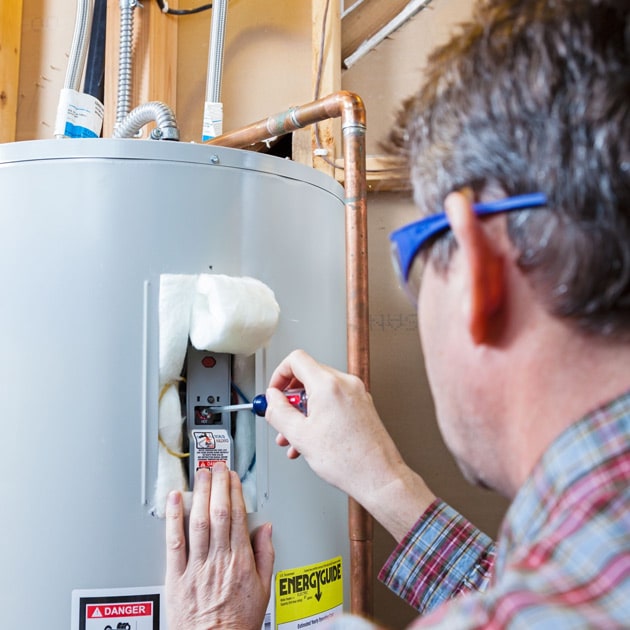
Professional Water Heater Installation in Buffalo and Erie County

over 17,120 reviews
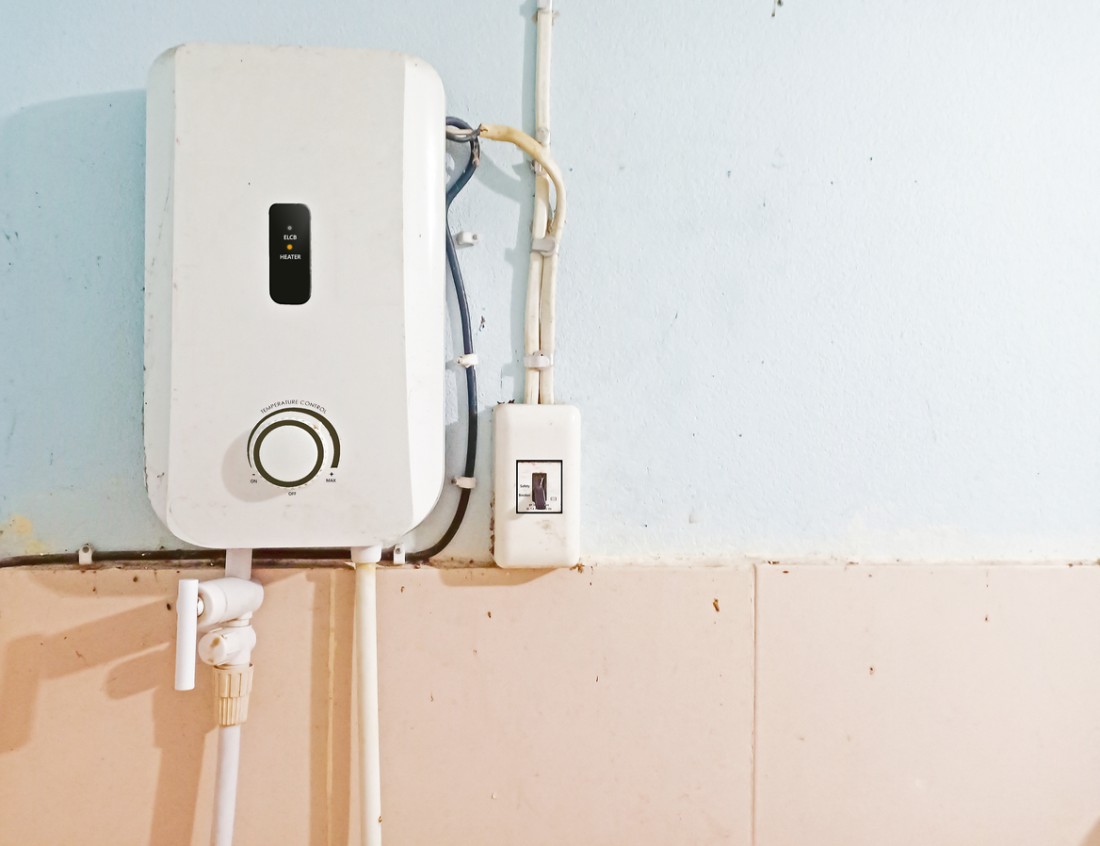
Reimer Heating, Cooling & Plumbing installs tank and tankless water heaters for homeowners across Buffalo and Erie County, with plumbers working in Rochester, Hamburg, Cheektowaga, Albany, Syracuse and communities throughout Upstate New York. We work on all makes and models, gas and electric, including conversions from one technology to the other where the house supports it.
A water heater is one of the few heating appliances in your home that runs every single day for a decade or more without anyone thinking about it. That only happens when it was sized for the household that actually lives there and installed around what the equipment needs, which is not always what the last one had.
Want to install a new water heater? Call Reimer Heating, Cooling & Plumbing to schedule your installation. We’re here to help.
Book an Appointment
Should You Install a Tank or Tankless Water Heater?
A storage tank keeps a set volume of water hot and ready to go. A tankless unit heats water as it flows, so it only fires when a tap opens. Both work well in Buffalo and Erie County homes when they are sized correctly, and both disappoint when they are not.
A conventional tank is usually the better choice when:
- Your household demand peaks predictably, such as two or three showers in the same morning window
- You want the lower upfront cost and a straightforward like-for-like installation
- The existing gas supply and venting can carry the new unit without modification
- You are replacing in a hurry, because a tank swap is a same-day job in most homes
Tankless is usually the better choice when:
- You want continuous hot water rather than a fixed volume that runs out
- Floor space in the basement or utility area is worth reclaiming
- You plan to stay in the house long enough to benefit, since tankless units typically last twice as long as a tank
- Your gas supply can be upsized and there is a practical route for sidewall venting and a condensate drain
The numbers behind those choices matter more. On a tank, the figure to look at is first hour rating, which combines the stored volume with how quickly the burner or elements recover. Two forty gallon tanks with different recovery rates will not give you the same shower on a Monday morning. On a tankless unit, it is flow rate at the temperature rise you actually need, and that rise is far greater here in February than the example printed on the box. Sized against the coldest month, tankless performs; sized against the headline figure, it runs thin exactly when you notice.
There is also the installation itself to weigh. A tank replacement usually connects to what is already there. A tankless conversion often means upsizing the gas line from half inch to three quarter inch, running a new sidewall vent and adding a condensate drain, which is a planned project rather than something to decide at nine at night with no hot water in the house.
We work through all of it with you before quoting; how many fixtures run at once on your busiest morning, what your gas supply and venting can support, how long you plan to stay, and what each option costs to install and to run. Then you choose with the full picture.
Why Winter Water Temperature Changes Tankless Sizing in Buffalo and Erie County
Incoming water across Buffalo, Erie County, Rochester and Syracuse runs cold in midwinter, and a tankless heater has to lift it much further than it would in a mild climate. The same unit that delivers plenty in October runs thin in February if it was chosen off the headline figure.
So we size on the coldest month and on simultaneous use, meaning how many fixtures you genuinely run at once on a weekday morning. Undersizing is the most common complaint we hear about tankless systems, and it is an installation decision rather than a fault in the technology.
The gap is bigger than most people expect. A unit rated to deliver five gallons a minute at a modest temperature rise might manage barely half that when it is lifting near-freezing water to shower temperature, which is the difference between two showers running at once and one shower that goes lukewarm when the dishwasher starts. That is why we work from your fixture count and the February inlet temperature rather than the number on the spec sheet, and why we will recommend a larger unit, or a second one, when the household demands it.
The Venting Problem That Catches Out Older Buffalo Homes
A great many homes here have a masonry chimney that once vented both the furnace and the water heater. When the furnace is replaced with a high efficiency condensing model that vents through the sidewall, the water heater is left alone in a flue now far too large for it.
That is called an orphaned water heater, and it matters. An oversized cold chimney draws poorly, condenses flue gas, degrades the liner and can spill combustion products into the house. The fix is either a correctly sized chimney liner or a power vented or direct vent water heater that vents through the wall. If your furnace has been upgraded and your water heater has not, this is the first thing we check when we quote.
What Is Included in a Water Heater Installation?
The old unit is drained, disconnected and removed. The new heater is set, connected to water and to gas or power, vented correctly, and fitted with the safety components the installation requires: a temperature and pressure relief discharge line to a safe termination, a drain pan and drain where the unit sits above finished space, dielectric unions between dissimilar metals, and a thermal expansion tank where a pressure reducing valve has closed the system.
Then it is filled, purged, started and leak checked at every joint. Where your municipality requires a plumbing permit and inspection, we pull it and meet the inspector. You get the controls explained, the delivery temperature set safely and the manufacturer warranty registered.
Are you considering converting from a tank to a tankless water heater? Converting is a bigger project than a swap. It commonly involves upsizing the gas line from half inch to three quarter inch, running a new sidewall vent, adding a condensate drain, and sometimes electrical work. On an electric to gas conversion, add a gas run.
None of that is a reason to avoid tankless. It is a reason to plan it rather than decide it during a plumbing emergency, and it is why we quote the whole conversion upfront instead of discovering the gas line halfway through the day.
Water Heater Installation Across Buffalo, Rochester, Syracuse and Albany
We install water heaters throughout Buffalo, Cheektowaga, Hamburg, West Seneca, Orchard Park, Tonawanda, Grand Island, Williamsville and Niagara Falls, and across Rochester and the Finger Lakes, Syracuse, Albany and the Capital Region.
Our certified plumbers install tank and tankless units, gas and electric, and work on every major brand, so the recommendation you get is based on what suits your home rather than what we happen to stock. That range matters in this housing, where a basement installation in a century-old home and a utility closet in a newer build ask completely different things of the same job. Permit and inspection requirements also differ from one town to the next across Erie County, and we handle those as part of the work rather than leaving them with you.
We have branches in Cheektowaga, Hamburg, Rochester, Clifton Park and Brewerton, so the plumber who installs your water heater works out of a location near you. Our call centre is available 24/7, and we offer Day or Night service when a heater fails outside normal hours, which is most of the time it happens.
Schedule Expert Water Heater Maintenance in Buffalo, NY
Routine maintenance is the best way to ensure your water heater continues to perform reliably. Reimer Heating, Cooling & Plumbing provides expert service designed to keep your system efficient and dependable.
Schedule your water heater maintenance with Reimer Heating, Cooling & Plumbing today and keep your hot water flowing year-round.
WE’VE GOT YOU COVERED
Maintenance Plans
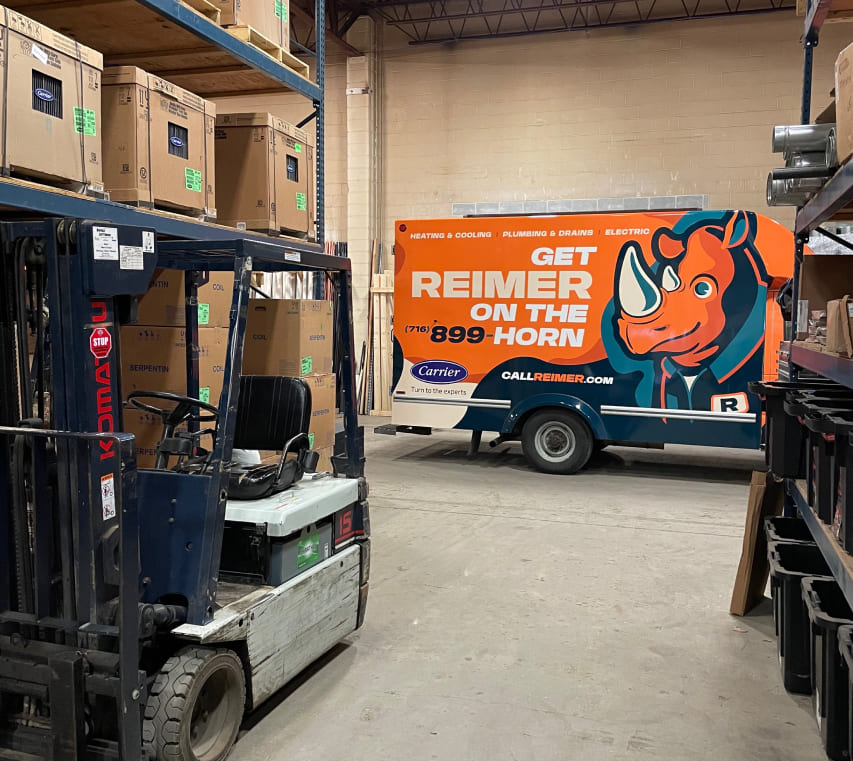
Since 1921, our team of Western NY’s top notch service specialists have been serving the area and caring for thousands of customers. At Reimer, we do everything in our power to ensure that your home comfort system works efficiently and effectively every time you turn it on.
- Multi-Point System Inspection
- Calibrate System for Efficiency
- Ensure Proper Airflow
- Maintain System Warranties
- Reduces Unexpected Breakdowns
- Evaluate Filtration & Indoor Air Quality
- Routine Maintenance Leads to Reduced Utility Bills and Extends the Life of your System(s)
Why Homeowners Trust Reimer for Water Heater Installation
We have been installing water heaters in this region since 1921, and Buffalo News readers voted us Best of 716 for plumbing in 2025. Behind more than 13,764 Google reviews is a simple pattern: the unit was sized properly, the venting was done properly, and the price held.
Every plumber who comes to your door is licensed, certified and background checked, and you approve the price before we start. We work on all makes and models, tank and tankless, gas and electric, so what we recommend comes down to what suits your home rather than what we happen to carry. Because we run plumbing and heating under one roof, a job that turns out to involve a shared chimney or a furnace flue stays with one company instead of becoming two appointments and a gap in between.
Every installation is backed by our 100% satisfaction guarantee, and our water heater maintenance keeps the unit you paid for running the way it should.
Schedule a Water Heater Installation with Reimer Today
Whether you are replacing like-for-like or seriously considering tankless, we will size it to your actual hot water demand and tell you exactly what the installation involves.
Call Reimer at (716) 272-2371 to schedule your water heater installation in Buffalo, Erie County or anywhere across our Upstate New York service area, or book online and we will confirm your arrival window.
Water Heater Installation FAQ
How long does a water heater installation take?
A like-for-like tank replacement is usually two to four hours, and you have hot water again the same day. A tankless conversion generally takes a full day, because it involves gas line work, a new sidewall vent and a condensate drain. If the venting or the gas supply needs upgrading, we tell you that at the quote rather than on the day.
What size water heater do I need?
It comes down to peak demand rather than the number of bedrooms. For a tank we work from first hour rating against your busiest hour, which is usually the weekday morning. For a tankless unit we work from flow rate at the temperature rise needed in February, when the incoming water is at its coldest. We size it at your house, not over the phone.
Do I need a permit to install a water heater?
Many municipalities across Erie County require a plumbing permit and an inspection for a water heater installation, and the rules differ from one town to the next. We confirm what applies at your address, pull the permit and meet the inspector as part of the job.
Will you take the old water heater away?
Yes. Draining, disconnecting, removing and disposing of the old unit is part of every installation we carry out. You are not left with a tank in the driveway.
Can you convert my electric water heater to gas?
Often, though it is a larger project than a straight swap. It needs a gas line run to the installation point, correct venting and, depending on the location, changes to the electrical supply. We assess whether the conversion is practical in your home and quote the full scope rather than starting and discovering the gas run halfway through.
How to extend the lifespan of my new water heater after installation?
Keeping your water heater running smoothly for years is easier than you think. Here are some simple tips to help you get the most out of your water heater.
Regular Maintenance is Key
Water heaters need regular check-ups. Aim for a professional tune-up at least once a year. The technician will look over key parts, flush the tank, and make sure everything’s in good working order. This routine can spot small issues before they become big problems.
Flush the Tank Annually
Sediment build-up can mess with your water heater’s efficiency. Flushing the tank once a year helps clear this out. It’s pretty simple: drain the tank, rinse it out, and refill it. This step can boost your heater’s performance and lifespan.
Check the Anode Rod
The anode rod prevents rust inside your water heater. Over time, it corrodes and needs replacing. Check it every one to three years and replace it if it’s too corroded. This small part plays a big role in keeping your tank in good shape.
Insulate the Tank and Pipes
Adding insulation to your water heater tank and pipes can reduce heat loss and improve efficiency. This is especially helpful if your water heater is in a cold spot like a basement or garage. It’s a cost-effective way to help your heater keep a steady temperature and use less energy.
Watch the Temperature
Set your water heater’s thermostat to 120 degrees Fahrenheit. It’s hot enough for your needs but not so hot that it stresses the tank and heating elements. Plus, lowering the temperature can save energy and reduce the risk of burns.
Fix Leaks Quickly
Even a small leak can cause big trouble over time. If you notice water around your heater or signs of a leak, make sure to take care of it right away. Small leaks are often easy to fix, but if you ignore them, they can cause huge damage and shorten your heater’s life.
Consider a Water Softener
If you have hard water, a water softener will help. Hard water leads to scale build-up inside your heater, reducing efficiency and lifespan. A water softener prevents this build-up, keeping your heater running better for longer.
By following these tips, you can keep your water heater in great shape and make it last longer. Regular maintenance and a few simple steps can make a big difference in extending the life of this home appliance.
How long should a new water heater last?
A conventional tank typically runs eight to twelve years in this region. Tankless units commonly last twenty or more with descaling maintenance, which is worth weighing when the two prices look far apart. Annual maintenance is the single biggest factor in reaching the upper end of either range.
Over
100YEARS OF
EXPERIENCE
Heating, Cooling & Plumbing, Drain and Electrical Services in Buffalo, New York.
For decades, local homeowners have trusted the team at Reimer Home Services with all their home service needs. We’re your HVAC company in Buffalo. We’re your plumbers here in Western New York. Above all else, we’re here for you and your home.rnrnYou can count on our team to be there when you need us. In fact, we’re available Day or Night. Your home’s problems can’t wait, and neither should you. Call us and let us know how our plumbers and techs can help.






We’re your local home services team…
We’re here for local homeowners.
Proud to serve Buffalo and Erie County.
From Buffalo to Albany and all points in between, we’re your local heating, cooling, and plumbing pros. No matter where you live in Erie County and surrounding New York communities, you can count on Reimer Heating, Cooling & Plumbing to be there for your home with our fast, Day or Night service.
Click the link below to see all the communities we serve, and to contact us for service.
Our plumbers fix it all.
Our team works with all makes and models.