



If you’re a homeowner in Western or Upstate New York, you may have heard that air conditioning and heat pump systems are going through a refrigerant change. Contractors, manufacturers, and even news outlets are talking about R-410A being phased out and replaced with newer refrigerants like R-454B.
For many homeowners, this raises important questions: Will my current system become obsolete? Will repairs cost more? Should I replace my equipment now or wait?
Reimer Heating, Cooling & Plumbing regularly helps homeowners across Buffalo, Cheektowaga, Hamburg, Rochester, and Schenectady understand how refrigerant regulations affect their homes. This guide explains what the R-410A to R-454B transition means in plain terms, how it impacts New York homeowners, and what you should consider before your next HVAC decision.
Why Are Refrigerants Changing?
Refrigerant regulations are driven by environmental policy. Older refrigerants contribute more significantly to global warming when released into the atmosphere. As a result, the HVAC industry is shifting toward refrigerants with lower environmental impact.
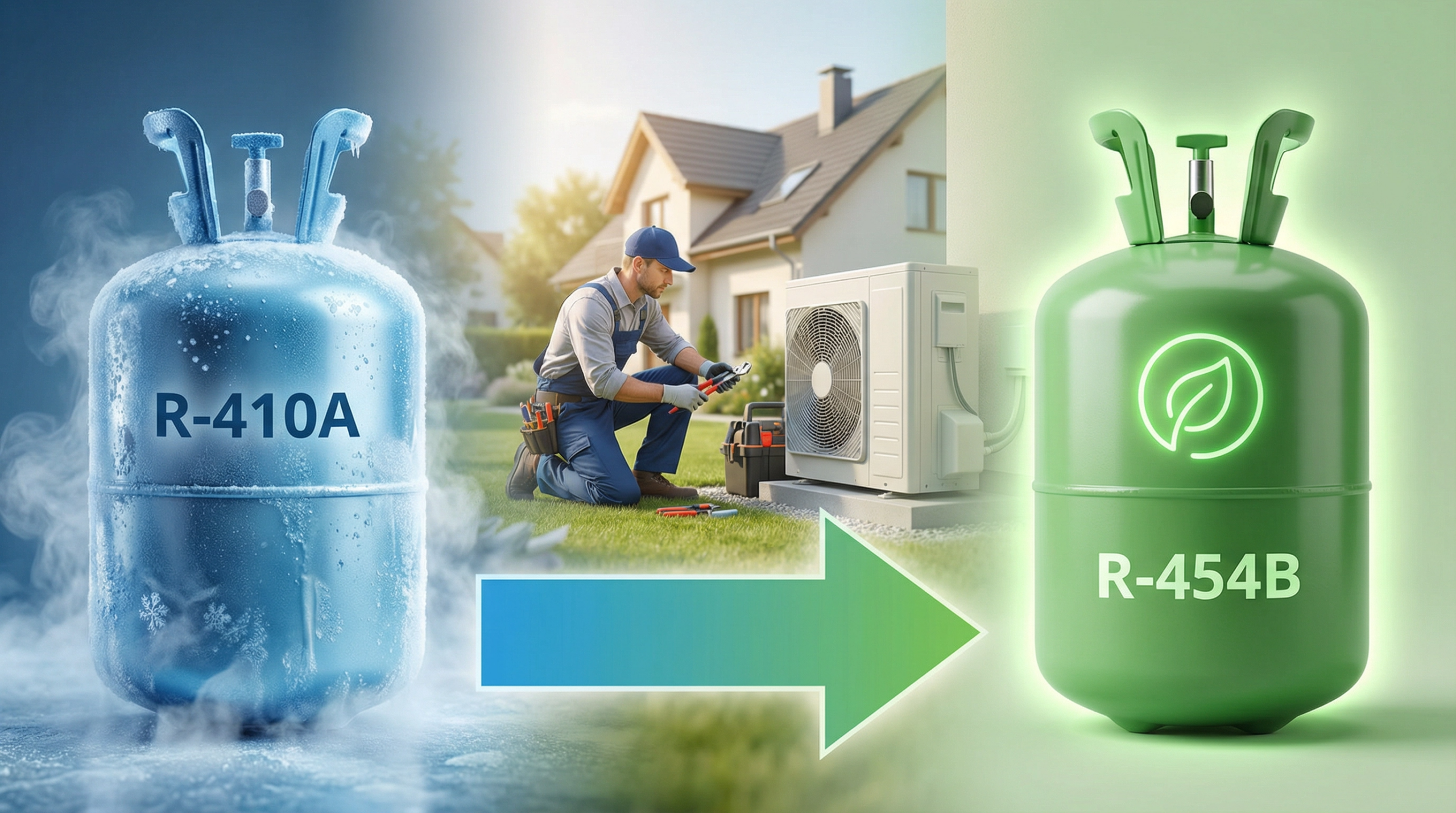
R-410A, which has been widely used for residential air conditioners and heat pumps for years, has a high Global Warming Potential (GWP). While it does not damage the ozone layer, it is being phased down under new regulations to reduce long-term environmental impact.
R-454B is one of several next-generation refrigerants developed to meet these goals.
What Is R-454B?
R-454B is a newer refrigerant designed to replace R-410A in many residential HVAC systems. It offers similar performance while significantly reducing environmental impact.
Key characteristics of R-454B include:
- Much lower Global Warming Potential than R-410A
- Comparable efficiency and capacity
- Compatibility with modern system designs
Because of these advantages, many manufacturers are transitioning new equipment to R-454B starting in 2025 and beyond.
Why R-454B Is Classified Differently Than R-410A
One important difference homeowners may hear about is safety classification.
R-410A is classified as A1, meaning non-flammable under standard conditions.
R-454B is classified as A2L, meaning it is mildly flammable.
This classification does not mean systems are unsafe. Instead, it reflects strict testing standards. HVAC equipment designed for A2L refrigerants includes:
- Enhanced leak detection
- Improved ventilation requirements
- Updated installation and safety protocols
When installed and serviced correctly by licensed professionals, A2L systems are considered safe for residential use.
What the Refrigerant Change Means for New York Homeowners
Existing R-410A Systems Are Not Illegal
If your home currently uses R-410A, you are not required to replace it. Existing systems can continue to operate and be serviced.
However, as production of R-410A decreases:
- Refrigerant costs may rise
- Availability may become more limited
- Repairs involving refrigerant could become more expensive
This is similar to past refrigerant transitions that homeowners may remember.
New Systems Will Use R-454B (or Similar Refrigerants)
New air conditioners and heat pumps sold in New York will increasingly use R-454B or other low-GWP refrigerants. These systems are specifically engineered for the new refrigerants and cannot be retrofitted from R-410A.
Homeowners installing new equipment should expect:
- Updated safety features
- New installation standards
- Comparable or improved efficiency
Should You Replace Your System Before the Change?
There is no universal answer. The right decision depends on the age and condition of your current system.
You may consider replacement if:
- Your system is 12–15 years old
- You’ve had repeated refrigerant leaks
- Major repairs are becoming frequent
- Efficiency no longer meets your needs
If your system is newer and running well, replacement is usually unnecessary.
Reimer Heating, Cooling & Plumbing helps homeowners evaluate whether repair or replacement makes the most financial sense based on long-term costs — not just refrigerant changes.
How Refrigerant Changes Affect Heat Pumps in New York
Heat pumps are becoming more popular across Western and Upstate New York due to their energy efficiency and ability to provide both heating and cooling.
The R-410A to R-454B transition affects heat pumps similarly to air conditioners, with one added consideration: cold-climate performance.
Manufacturers are designing new R-454B heat pumps to:
- Maintain performance in freezing temperatures
- Meet updated efficiency standards
- Comply with cold-climate installation requirements
This is especially important for New York homeowners relying on heat pumps during long winters.
Will Repairs Cost More After the Phase-Down?
Over time, refrigerant transitions typically lead to higher costs for older systems.
Possible impacts include:
- Higher R-410A refrigerant prices
- Longer wait times for refrigerant availability
- Fewer technicians carrying large supplies
This doesn’t mean immediate price spikes, but homeowners with aging systems should factor refrigerant availability into future repair decisions.
Common Myths About the Refrigerant Transition
“My System Will Stop Working Overnight”
False. Systems using R-410A will continue operating normally as long as they are properly maintained.
“New Refrigerants Are Dangerous”
Also false. New refrigerants are thoroughly tested and regulated. Safety requirements for A2L refrigerants are built into system design and installation standards.
“I Should Replace My System Immediately”
Not necessarily. Replacement should be based on system age, condition, and efficiency — not fear of regulatory change.
Why Professional Installation and Service Matter More Than Ever
As refrigerants evolve, professional expertise becomes even more important. New systems require:
- Specialized tools and training
- Updated safety procedures
- Code-compliant installation practices
Improper installation can lead to reduced performance, safety issues, and voided warranties.
Reimer Heating, Cooling & Plumbing stays current with refrigerant regulations and manufacturer requirements to ensure systems are installed safely and correctly for New York homes.
How Homeowners Can Prepare for the Transition
Homeowners don’t need to rush, but preparation helps.
Smart steps include:
- Scheduling annual HVAC maintenance
- Addressing refrigerant leaks promptly
- Budgeting for future system replacement
- Discussing refrigerant options during estimates
Staying informed allows you to make confident decisions when the time comes.
What This Change Means for Long-Term Home Comfort
The shift from R-410A to R-454B is part of a broader move toward more efficient, environmentally responsible HVAC systems. For homeowners, the long-term benefits include:
- Reduced environmental impact
- Improved system efficiency
- Modern safety features
- Better compatibility with future regulations
When managed properly, this transition supports reliable comfort without unnecessary disruption.
Why Understanding Refrigerant Changes Protects Your Investment
HVAC systems are major home investments. Understanding how refrigerant regulations affect system lifespan, repair costs, and replacement timing helps homeowners avoid rushed decisions and unexpected expenses.
With the right guidance, homeowners can plan upgrades strategically rather than reactively.
Why Refrigerant Changes Matter for Long-Term Comfort and Costs
Refrigerant transitions don’t mean immediate action is required, but they do influence future decisions. Knowing how R-410A and R-454B differ helps homeowners understand repair costs, replacement timelines, and what to expect from new equipment as technology evolves.
Reimer Heating, Cooling & Plumbing helps homeowners across New York navigate these changes with clear information and honest recommendations, ensuring comfort systems remain reliable, efficient, and compliant for years to come.
Call Reimer Heating, Cooling & Plumbing today to discuss how upcoming refrigerant changes may affect your home’s HVAC system.