


Basements in Western and Upstate New York are exposed to moisture year-round. Snowmelt in the spring, heavy rainstorms in summer, and fluctuating temperatures throughout the year all contribute to damp conditions below ground level. Homeowners in Buffalo, Cheektowaga, Hamburg, Rochester, and Schenectady often notice musty odors, condensation on walls or pipes, or a general feeling of dampness — especially after storms or during humid weather.
While some moisture is common in basements, persistent humidity is not normal and should never be ignored. Left unaddressed, excess moisture can lead to mold growth, structural damage, and poor indoor air quality throughout the home.Reimer Heating, Cooling & Plumbing helps New York homeowners identify the causes of basement humidity and implement long-term solutions using proper dehumidification, ductwork evaluation, and moisture control strategies. This guide explains why basement humidity happens, how to control it effectively, and how to prevent mold before it becomes a serious problem.
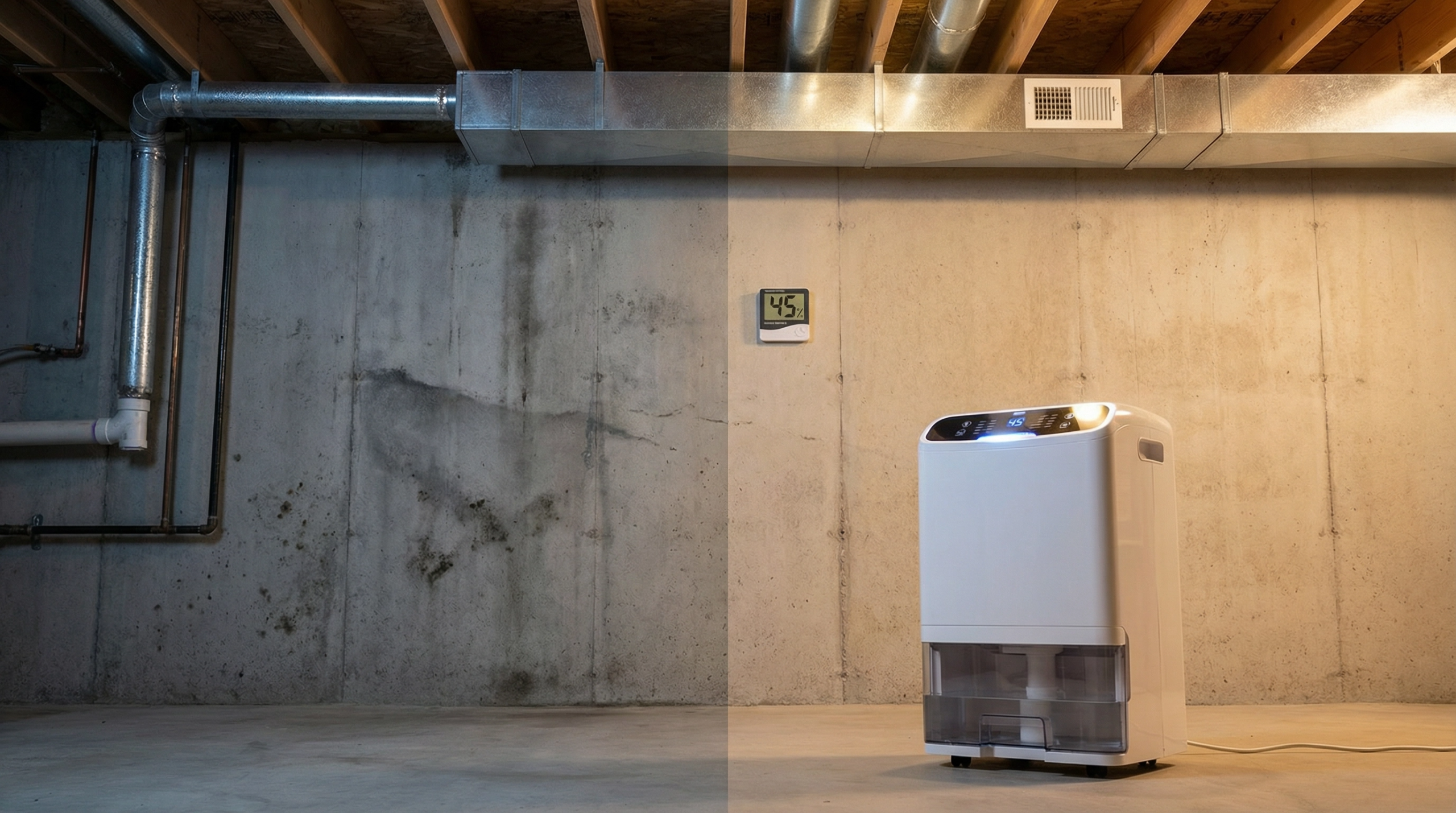
Why Basements Are Prone to Humidity in New York Homes
Basements are naturally more vulnerable to moisture because they are surrounded by soil that holds water. In New York, this issue is intensified by seasonal weather patterns.
Common contributors include:
- Spring snowmelt saturating the ground around foundations
- Heavy summer rainfall overwhelming drainage systems
- High outdoor humidity entering through cracks and openings
- Cool basement temperatures causing condensation
Homes near Lake Erie and Lake Ontario often experience higher ambient moisture levels, making basement humidity control especially important in these regions.
What Basement Humidity Levels Are Considered Too High?
Humidity is measured as relative humidity (RH). For basements, experts generally recommend maintaining RH levels between 30% and 50%.
When humidity rises above 60%, homeowners may notice:
- Musty or earthy odors
- Condensation on walls, floors, or windows
- Damp insulation or stored items
- Warping wood or peeling paint
At these levels, conditions become ideal for mold and mildew growth.
How Mold Develops in Damp Basements
Mold spores are always present in the air, both indoors and outdoors. Moisture is what allows those spores to grow and spread.
Basements are particularly vulnerable because:
- Air circulation is often limited
- Moisture sources may be hidden behind walls
- Temperature differences cause condensation on cool surfaces
Once mold begins growing, it can spread quickly through drywall, wood framing, insulation, and carpeting. Mold doesn’t stay confined to the basement — spores can circulate throughout the home via HVAC systems and natural airflow.
The Role of Dehumidifiers in Basement Moisture Control
Portable Dehumidifiers: Pros and Limitations
Portable dehumidifiers are a common first step for homeowners dealing with mild basement humidity. These units can help reduce moisture in smaller areas.
Advantages include:
- Lower upfront cost
- Easy installation
- Useful for localized dampness
However, portable units often struggle in larger or consistently damp basements. They typically:
- Have limited moisture removal capacity
- Require frequent emptying
- Run constantly without achieving stable humidity
For many New York homes, portable dehumidifiers provide temporary relief rather than a permanent solution.
Whole-Home Dehumidifiers: A More Effective Option
Whole-home dehumidifiers integrate directly with a home’s HVAC system and provide consistent moisture control across the basement and living spaces.
Benefits include:
- High-capacity moisture removal
- Automatic drainage
- Even humidity control
- Improved indoor air quality
These systems are especially effective in homes with finished basements or ongoing humidity issues caused by climate and soil conditions.
How HVAC Ductwork Can Increase Basement Humidity
Many homeowners don’t realize that HVAC ductwork can actually contribute to basement moisture problems.
Common duct-related issues include:
- Leaky ducts drawing humid air into the basement
- Poor airflow creating stagnant air pockets
- Uninsulated ducts causing condensation
- Improper return placement pulling damp air into the system
Older homes often have ductwork that was not designed with moisture control in mind, leading to persistent humidity issues that dehumidifiers alone can’t fix.
Why Ventilation Alone Often Makes Humidity Worse
Opening basement windows or adding fans may seem like a simple fix, but ventilation often worsens humidity during New York summers.
When outdoor air is humid:
- Moisture enters faster than it can escape
- Condensation increases on cool basement surfaces
- Mold risk rises significantly
Effective humidity control requires removing moisture from the air, not just circulating it.
Plumbing Problems That Add Moisture to Basements
Plumbing issues are another frequent source of basement humidity.
Common problems include:
- Slow or hidden pipe leaks
- Condensation on cold water lines
- Aging water heaters
- Poorly draining floor drains
Even minor leaks can steadily increase humidity levels over time, creating ideal conditions for mold growth without obvious signs of standing water.
The Connection Between Sump Pumps, Drainage, and Humidity
Basements depend on proper drainage to remain dry. When water isn’t directed away from the foundation, moisture levels rise quickly.
Issues often include:
- Failing or undersized sump pumps
- Improper discharge locations
- Power outages during storms
- Clogged or damaged perimeter drains
During heavy rain or spring thaw, these problems can lead to standing water and severe humidity spikes.
Signs Your Basement Needs Professional Moisture Control
Homeowners should consider professional evaluation if they notice:
- Persistent musty odors
- Visible mold or mildew
- Peeling paint or white powdery residue (efflorescence)
- Warped flooring or trim
- Dehumidifiers running constantly with little improvement
Ignoring these signs can allow moisture damage to spread beyond the basement.
How Professionals Identify the Root Cause of Basement Humidity
Professional moisture control starts with identifying where the moisture is coming from.
A thorough evaluation may include:
- Measuring humidity levels
- Inspecting ductwork and airflow
- Checking plumbing systems
- Evaluating foundation drainage and sump pumps
- Identifying condensation sources
Addressing only one factor often leads to recurring problems. Long-term solutions focus on the entire system.
Why Basement Humidity Affects the Entire Home
Basement air doesn’t stay confined below ground. Moist, mold-prone air can move upward through:
- Stairwells
- HVAC ductwork
- Wall cavities
This can lead to:
- Poor indoor air quality
- Increased allergy symptoms
- Uneven temperatures
- Lingering odors throughout the home
Controlling basement humidity improves comfort and air quality throughout the house.
Practical Steps Homeowners Can Take to Reduce Humidity
Homeowners can support moisture control efforts by:
- Keeping gutters and downspouts clear
- Extending downspouts away from the foundation
- Sealing foundation cracks
- Insulating cold water pipes
- Scheduling regular HVAC and plumbing inspections
These steps work best when combined with professional humidity control solutions.
Why Professional Guidance Matters
Basement humidity problems rarely have a single cause. Choosing the wrong solution — such as oversized fans or undersized dehumidifiers — can waste money and fail to resolve the issue.
Reimer Heating, Cooling & Plumbing takes a whole-home approach, addressing HVAC performance, ductwork design, plumbing conditions, and drainage together to create healthier basements across New York.
Why Managing Basement Humidity Protects Your Home and Health
Excess basement moisture doesn’t just affect one area of your home. It can compromise indoor air quality, damage building materials, and create conditions that allow mold to thrive. Proper humidity control helps protect your home’s structure, improves comfort, and reduces health risks associated with mold exposure.
With the right combination of dehumidification, ductwork improvements, and moisture management, homeowners can enjoy dry, comfortable basements year-round — even in New York’s challenging climate.
Call Reimer Heating, Cooling & Plumbing today to schedule a professional evaluation and take control of basement humidity in your New York home.